The first in a series of Asite launches built to support projects across the complete asset lifecycle.
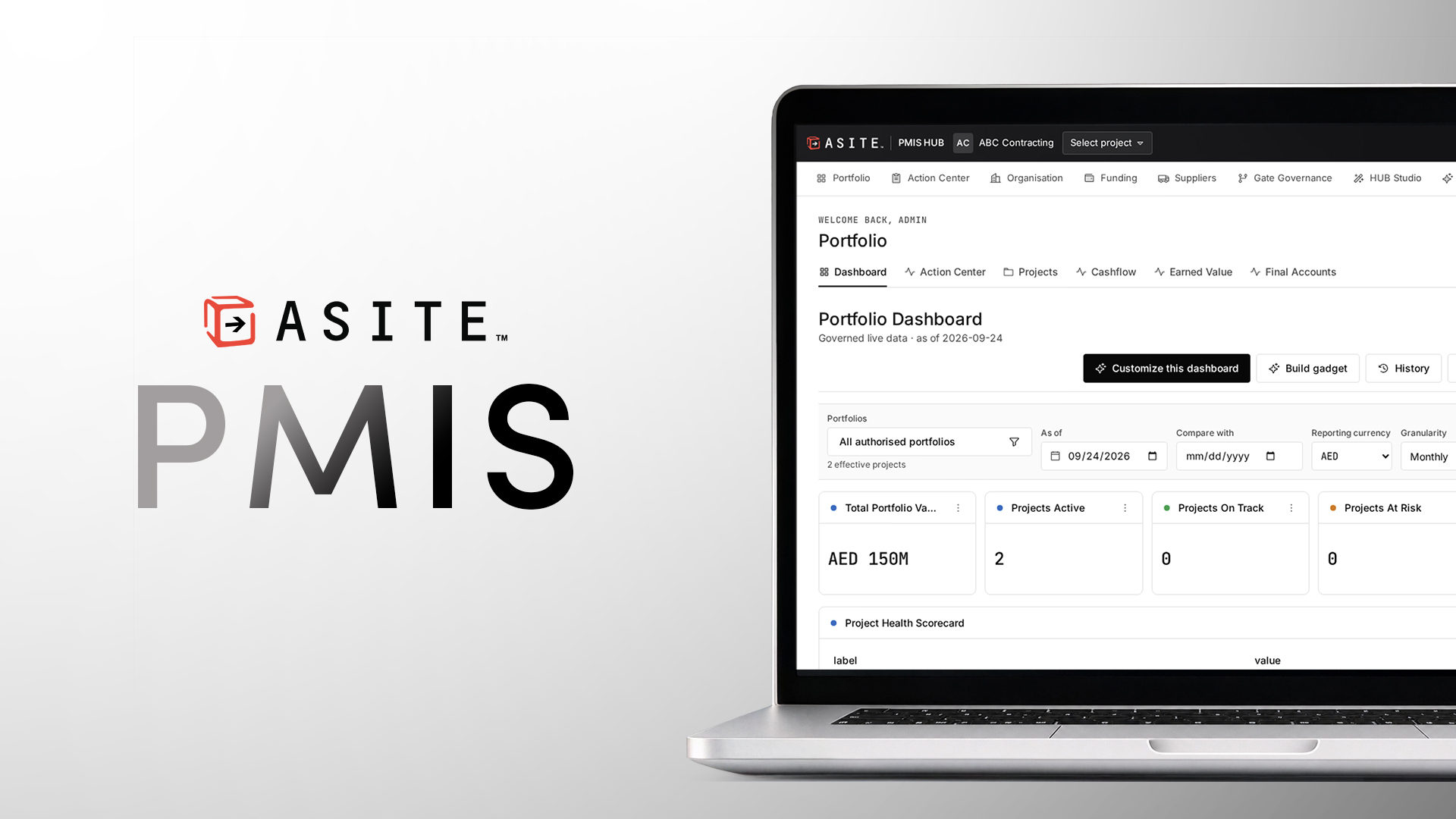
LONDON, [3rd November 2026] – Asite, which has defined the Common Data Environment (CDE) category since 2001, today launched Asite PMIS, a project management information system that brings cost, schedule, risk and performance into one governed record. It is the first in a series of new launches taking Asite beyond project information and into supporting assets across their whole lifecycle.
On most major capital projects, the numbers the board relies on are stitched together by hand. The schedule lives in one tool, cost in a spreadsheet, approvals in email chains, and the monthly report is rebuilt from scratch every month. By the time a figure reaches the boardroom, few people can say where it came from, or whether it is still right.
Asite PMIS replaces the manual information gathering. Dashboards, schedules, budgets, contracts, change, risk, safety, quality, funding and asset records share one data model, so the dashboard the board sees is built from the same lines the site team enters.
“Every project leader has sat in a meeting where two people quote two different numbers for the same thing. PMIS is built so every figure traces back to the budget line, contract or certificate behind it. And when a number can’t be backed up, the system tells you why instead of showing a silent zero.”
- Adi Zaqout, Director of Product and Technology Innovation
What changes for project controls teams
Asite PMIS is built around three outcomes that matter at every month-end.
-
Access the right data so you can stand behind your numbers.
Upload a Primavera P6 programme and Asite PMIS scores it against all 14 DCMA schedule checks, with flagged activities and a 0–100 health score, before anyone plans or reports around it. Monthly Cost Report periods lock on approval. Reopening a period creates a versioned revision with a mandatory comment, and the original stays untouched. Locking, access and audit rules are enforced at database level, with a full audit trail of every change.
-
Know what's driving performance so you can see the full project picture.
Budget, commitments, variations, accruals and forecast come together in one period-based cost report. Accruals reverse automatically in the next period rather than disappearing. The work breakdown structure is imported from the live P6 schedule, so the structure everyone reports against is the one being executed. SPI, CPI and DCMA health indicators sit side by side, and multi-currency records hold the FX rate locked at award. -
Act on the insight so you can focus attention where it matters most.
Project health scorecards, portfolio-level visibility and risk management with a 5×5 heatmap help teams spot emerging issues early. Earned value is calculated from approved, locked period data rather than live spreadsheets, so the indicators reflect the position the project has actually signed off.
Asite AI then helps teams act on what they find, faster. It drafts schedule commentary, variation justifications and risk mitigations from the data already in Asite PMIS, giving project controllers a first draft to refine rather than a blank page. Each draft is reviewed and approved through the same workflow as work written by a person, and AI is switched off on records that are locked or in review. Teams spend less of month-end writing, and every word in the report is still owned by the professional who signs it.
Asite PMIS is built to the standards construction teams already work to, including NRM2, POMI, FIDIC, NEC4, DCMA 14-point and ISO 19650. It is built on PMBOK® Guide principles and designed to support the project controls requirements of BS 202001:2025, the British Standards Institution's specification for project controls.
Asite PMIS is released globally; learn more: asite.com/book-a-demo.
2 minute read
Asite Insights in your inbox.
Sign up for product news and our latest insights published monthly. It's a newsletter so hot, even global warming can't keep up.