Construction is entering its most transformative decade – not driven by new machinery, but by intelligent software and connected data.
In this blog, we explore 3 trends that will shape project planning, delivery, and management in 2026: Artificial intelligence, connected data systems, and reality capture.
Agentic AI and automation
Agentic AI is a system that can take autonomous, goal-driven actions with minimal human supervision. Unlike traditional software that waits for instructions, agentic AI can observe project data, plan tasks, evaluate potential decisions, and refine its approach over time.
The potential of agentic AI for AEC Projects
Predictive planning
AI can analyze thousands of past schedules and detect early warning signs that a project could slip, so instead of reacting to delays, you can prevent them altogether.
Generative design
Rather than manually testing different layouts or design options, AI can generate multiple buildable alternatives based on cost, materials, and client requirements.
AI safety monitoring
Live camera feeds can be monitored automatically to flag any issues, such as missing PPE or unauthorized access, and then provide real-time alerts to supervisors. Companies using AI-driven safety tools have reported up to a 25% decrease in workplace accidents (Construction Today, 2024).
Automated quality assurance
3D scans can instantly be compared to your BIM model, highlighting clashes, defects, or deviations, without hours of manual checking.
Why is this beneficial?
Agentic AI does not just automate tasks; it reduces risk, saves time, and improves decision-making.
- Fewer delays and surprises: Early detection prevents programme slippage before it affects delivery.
- Lower rework costs: Catching design or construction errors earlier makes them cheaper and faster to fix.
- Safer sites: AI acts like a second pair of eyes, spotting hazards 24/7.
- Better use of people’s time: Teams spend less time on admin and more time solving real project problems.
- Stronger, more consistent decision-making: AI provides data-backed insights instead of guesswork.
- Improved consistency across projects: Automation ensures the same quality of checks and processes every time, eliminating inevitable human error.
However, AI can’t work miracles on its own. For AI to be successful, it needs:
- Clean, consistent, well-structured data
AI cannot interpret missing, messy, or conflicting information. - Common data standards and connected systems
If data is scattered across different platforms, AI cannot see the full picture. - Clear governance and ownership
Teams need processes for how data is captured, maintained, and validated.
Connected data systems
Is your project information scattered? Models in one system, documents in another, cost data in spreadsheets, site data in apps, photos on someone’s phone.
In 2026, the industry will shift from isolated tools to connected data ecosystems, where information flows freely between design, construction, and operations platforms without manual exporting, reformatting, or duplicate data entry.
The potential of connected data in AEC
Single source of truth
Everyone works from the same up-to-date information because systems continuously sync. No more “Which version is this?” or accidental rework due to outdated drawings.
Automated data exchange between platforms
BIM models, schedules, cost plans, defect records, and asset data can move between tools automatically, without someone manually downloading, reformatting, or reuploading.
Smarter workflows
When systems connect, workflows become automated. For Example:
- A change in the model updates the quantity take-off.
- This updates the cost plan.
- Which triggers a schedule review or risk alert.
This requires no human intervention.
Lifecycle Data Continuity
Information captured at design and construction flows directly into FM/Operations systems in a structured format. This means no more painful handover phases where asset data is rebuilt manually.
Why is this beneficial?
Connected ecosystems don’t just tidy up data; they remove friction, reduce errors, and unlock automation across the entire project lifecycle.
- Fewer manual tasks and less admin waste: No more duplicate data entry, downloading files, renaming documents, or manually syncing platforms.
- Lower risk of errors: When systems stay in sync automatically, the chance of someone working on an outdated or incomplete file drops dramatically.
- Clearer decision-making: Designers, planners, commercial teams, and site managers see the same aligned data. Decisions become faster and are based on facts, not assumptions.
- Enhanced cybersecurity: Cloud platforms invest heavily in security, protecting sensitive project data.
- Faster onboarding: New staff and subcontractors can be added instantly, without complex installations.
Reality capture and digital twins
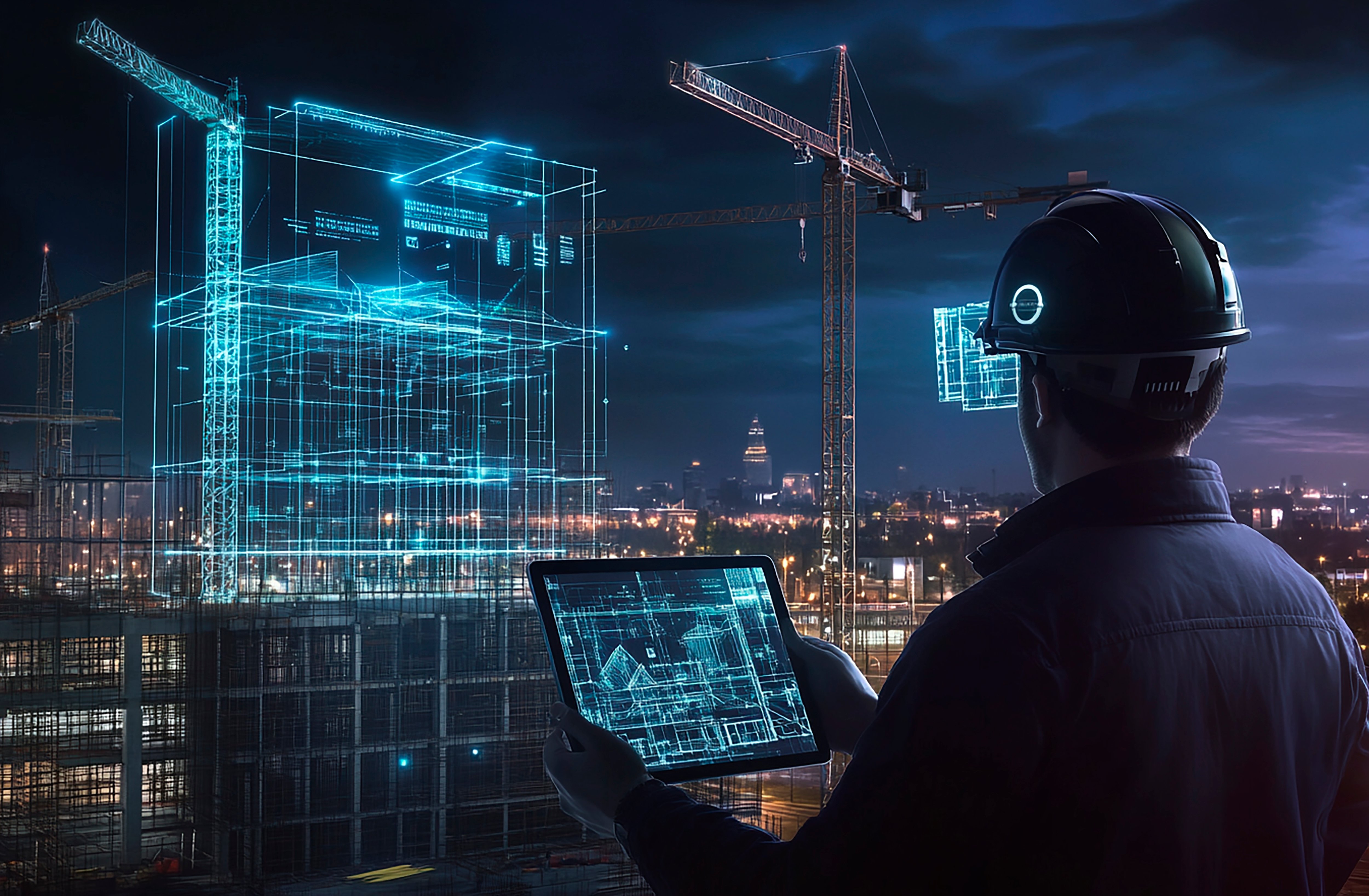
Reality capture refers to technologies that record what’s physically happening on site, such as drones, 360° cameras, LiDAR scanners, photogrammetry apps, and IoT sensors. In 2026, these tools will continue to become far more automated and integrated, creating digital twins that mirror the live state of a project.
Instead of relying on weekly site walks, scattered photos, or personal judgment, teams will see an accurate digital version of the site, updated continuously.
The potential of reality capture and digital twins for AEC
Automatic progress tracking: Drone flights and 360° camera walks are processed automatically to show what’s built, what’s behind schedule, and what’s missing, without Project Managers spending hours marking up drawings.
As-built vs as-designed comparisons: Laser scans and photogrammetry models are aligned with BIM models to highlight deviations, clashes, and incomplete installations. This moves quality assurance from reactive to proactive.
Digital site walks for remote teams: Stakeholders can explore a 3D view of the site from anywhere, enabling remote sign-offs, reduced travel, and quicker problem resolution.
Environmental and safety monitoring: Sensors can track noise, dust, vibration, temperature, access movements, and hazardous conditions, feeding real-time alerts to site managers and safety teams.
Why is this beneficial?
- Fewer site surprises: Teams know exactly what’s happening in the field, even if they’re remote. Issues are caught as they emerge, not weeks later.
- Reduced rework and cost overruns: As-built comparisons highlight installation errors early, before they impact the programme or require expensive rework.
- Faster, data-backed reporting: Progress reports, valuations, earned value assessments, and client updates become evidence-based and largely automated.
- Better coordination between design and construction: When the digital twin reveals discrepancies, design teams can resolve them immediately instead of during late-stage reviews.
- Improved safety compliance: Sensors and visual analytics spot hazards early and help enforce PPE and exclusion zones consistently.
- Transparency and trust: Clients, contractors, and subcontractors can all have access to the same source of truth, reducing disputes and improving collaboration.
Don’t get left behind: why these technologies matter
These three trends share one common theme: data must be accurate, connected, and accessible.
Read our guide “The Information Manager’s Guide to CDE Adoption” to understand how to build the foundations for better data flow and smoother technology adoption across your projects.
4 minute read
Asite Insights in your inbox.
Sign up for product news and our latest insights published monthly. It's a newsletter so hot, even global warming can't keep up.